Lei Jun VS Elon Musk: The Transcontinental Tech Legends
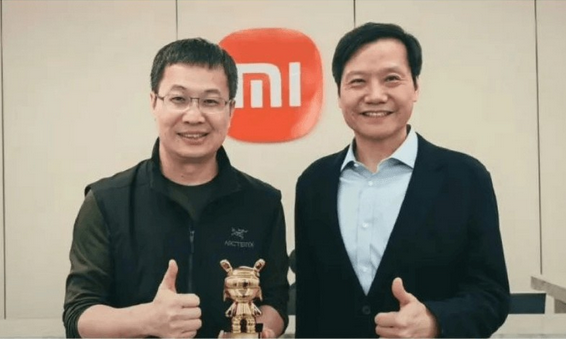
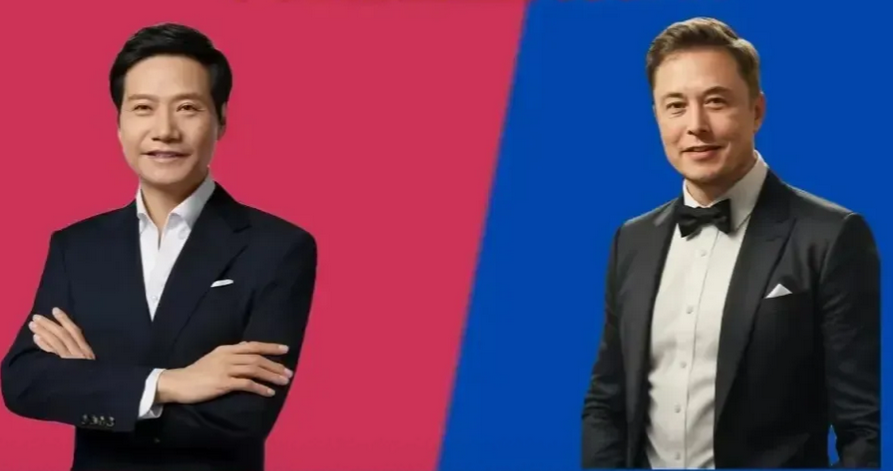
Lei Jun and Elon Musk are undoubtedly the two brightest stars in the global technology industry. In this Lei Jun VS Elon Musk comparison,One of them is from the East and has been pioneering in the field of science and technology by virtue of his deep insight into the local market and sound business layout; the other one is from the West and has been challenging the boundaries of science and technology with his wild imagination and fearless adventurous spirit. Their stories are not only legends of personal struggles, but also a vivid portrayal of the collision and integration of two very different business philosophies.
Lei Jun VS Elon Musk
Before you dive into the many dimensions of Lei Jun and Musk, you may want to browse this overview of their information.
| Dimension | Lei Jun | Elon Musk |
| Date of Birth | 1969 | 1971 |
| Height | 181cm | 187cm |
| Zodiac Sign | Sagittarius | Cancer |
| Growth Environment | An ordinary rural family in China, emphasizing diligence and responsibility | A middle – class engineer family in South Africa, encouraging freedom and adventure |
| Educational Concept | The family attaches importance to diligence and a sense of responsibility. Parents lead by example and encourage him to change his fate through knowledge | The family supports free exploration. The father often exposes him to engineering equipment, and the mother cultivates his cross – boundary thinking and risk – taking spirit |
| Value Shaping | Experienced resource scarcity from childhood, forming a frugal and practical style; parents’ educational concept emphasizes “being down – to – earth” | Influenced by his father, he is obsessed with technical principles; his mother’s artistic and commercial genes prompt him to pursue “disruptive innovation” |
| Academic Path | Focuses on the computer field, practice – oriented, emphasizing the accumulation of localized experience | Cross – disciplinary (Physics + Economics), global vision, pursuing disruptive technologies |
| Early Motivation | Changing life through technology, emphasizing cost – effectiveness and practicality | Exploring the future of humanity, pursuing the limits of technology (such as Mars colonization, brain – computer interface) |
| Source of the First Pot of Gold | Salary and options from Kingsoft Software in the 1990s | $22 million from the sale of Zip2 in 1999 |
| Core Business Model | Hardware cost – effectiveness + Internet service ecosystem (Xiaomi mobile phone → AIoT → Automobile) | Technology disruption + capital leverage (PayPal → Aerospace/Electric Vehicle → Starlink) |
| Crisis Response | When Xiaomi’s sales declined in 2016, he took over the supply chain management personally and reversed the situation in two years, returning to the top three globally | In 2008, Tesla was on the verge of bankruptcy. It relied on NASA contracts and financing, and the fourth launch of Falcon 1 was successful in the same year, achieving a turnaround |
Let’s take a closer look at the similarities and differences between tech giants Lei Jun and Musk from a variety of perspectives.
Lei Jun VS Elon Musk- background: The soil nurtures the seeds of dreams
Lei Jun was born in 1969 in Xiantao, Hubei Province, to a rural family, and later grew up in a family of civil servants. His parents, as grassroots workers, set an example and passed on the values of diligence and responsibility to Lei Jun. In an environment where resources were relatively scarce, frugality and pragmatism were the undertones of his character. As a student, Lei Jun demonstrated a strong desire for knowledge and excellent learning ability, and with his own efforts, he was admitted to the Computer Science Department of Wuhan University. During his time at the university, he completed all his credits in just two years with superb self-discipline, and developed encryption software “Immunity 90” and other works, accumulating solid technical skills and laying the foundation for his future entrepreneurial path.
Born in 1971 in Pretoria, South Africa, Musk’s father was an electromechanical engineer and his mother was a Canadian nutritionist and model. The favorable family conditions provided him with abundant learning resources and opportunities for exploration. His father’s love of science and technology inspired Musk’s obsession with technical principles; his mother’s artistic and business genes gave him a cross-border mindset and a spirit of adventure. In the course of his education, he moved from South Africa to Canada, and eventually entered the University of Pennsylvania, where he earned a dual degree in economics and physics. His interdisciplinary learning background has given him a global perspective and unique way of thinking, which has paved the way for his future innovative development in many fields.
Lei Jun VS Elon Musk –Entrepreneurial journey: forge ahead and write a brilliant chapter
Lei Jun’s entrepreneurial road can be described as steady and steady, step by step. After graduating from university, he joined Kingsoft, where he stayed for 18 years. During that time, he led the development of WPS office software, and Microsoft to start a fierce competition. When the Internet wave came, he led Kingsoft to successfully transform the company and promote the company’s listing on the main board of Hong Kong. After leaving Kingsoft, Lei Jun became an angel investor and invested in many projects such as Vancl, YY Voice, UC Browser, etc. Lei Jun accumulated rich industry resources and investment experience. 2010, Lei Jun founded Xiaomi, which entered the cell phone market with the innovative model of “Internet + Hardware + New Retail”, and quickly established a firm foothold in the fiercely competitive technology industry. In 2010, Lei Jun founded Xiaomi and entered the mobile phone market with the innovative model of “Internet + Hardware + New Retail”, quickly gaining a foothold in the highly competitive technology industry. In 2010, Lei Jun founded Xiaomi, which entered the mobile phone market with the innovative model of “Internet + Hardware + New Retail” and quickly gained a firm foothold in the highly competitive technology industry. Subsequently, Lei Jun actively laid out the AIoT ecosystem and invested in more than 400 eco-enterprises.
Musk’s entrepreneurial journey is full of thrill and excitement. 1995, he founded Zip2, which provides online business guide services for cities, and sold it for $307 million in 1999, scooping up the first bucket of money in his life. That same year, he founded X.com, which later merged to become PayPal and was acquired by eBay in 2002 for $1.5 billion. Since then, Musk has been on a journey of cross-border disruption, and in 2002, he founded SpaceX, which is dedicated to lowering the cost of spaceflight and realizing the dream of human migration to Mars. Despite three failed rocket launches, Musk never gave up, and finally ushered in the highlight of the successful launch of Falcon 1 into orbit in 2008. 2004, Musk invested in Tesla and became its CEO, promoting the launch of a series of disruptive electric vehicles such as the Model S, Cybertruck, etc., and completely reshaping the logic of the automotive industry. In addition, he is also involved in SolarCity (new energy), Neuralink (brain-computer interface), The Boring Company (tunnel transportation) and many other fields, building a huge “human future technology matrix”.
Lei Jun VS Elon Musk– Business Philosophy: Two Minds, Leading in Different Directions
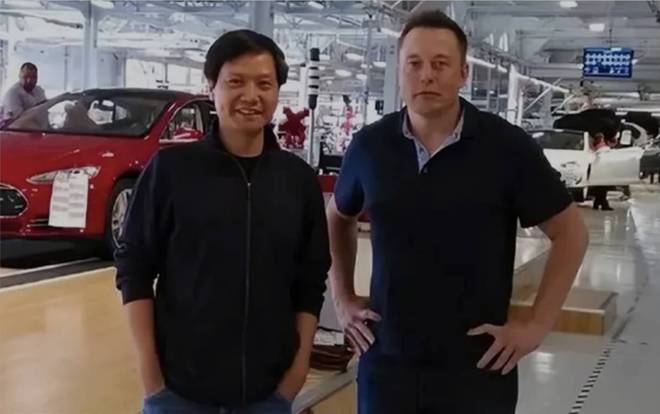
Musk has always adhered to the “first nature principle”, aiming to break through the boundaries of the industry and pursuing the ultimate innovation in technology. He dares to challenge tradition, from Tesla’s open-source electric car patent to SpaceX’s recoverable rocket technology, all of which show unprecedented pioneering. His business logic is built on bold conception and long-term vision of future technology, and he has realized cross-domain monopoly in many fields through technological disruption and capital operation. For example, Tesla’s purely visual autopilot route, despite being highly controversial, has pioneered a new business model of “user-paid subscription software”, leading the industry in a new direction.
Lei Jun, on the other hand, pays more attention to “progressive innovation + ecological synergy”, rooted in local market demand, and oriented to the user’s amazing experience. By integrating the Xiaomi ecosystem, he has realized the synergistic development of various businesses and built a strong commercial barrier. Taking Xiaomi SU7 as an example, the detailed design of the cell phone holder in the car and other details cleverly integrate the ecological chain products into the car scene, bringing users a convenient smart life experience. At the same time, Xiaomi is good at finding pain points in mature tracks, and through supply chain integration, user co-creation and marketing innovation, it wins market share with cost-effective products.
Lei Jun VS Elon Musk—Product Strategy: Different Emphasis on Performance and Experience
Tesla’s products take extreme performance as the core selling point and focus on the long-term value of technology iteration. the intelligent center control screen introduced in the early stage of Model S completely overturned the interaction logic of traditional automobiles and integrated the thinking of the mobile Internet into automobile design. Musk’s persistent pursuit of technology has kept Tesla at the forefront of electric vehicle technology. However, its Full Self-Driving (FSD) feature, though technologically leading, has been relatively slow in commercialization due to issues such as technical complexity and regulations.
Xiaomi, on the other hand, specializes in user insights, ensuring product performance while focusing more on user experience and cost-effectiveness. Xiaomi SU7 exceeded 100,000 orders within 72 hours of its launch through its precise pricing strategy and in-depth exploration of user needs. In the product development process, Xiaomi actively interacts with users, from the UI design of the car to the details of the function, all fully consider the user’s feedback. At the same time, Xiaomi also skillfully transformed technical terms into easy-to-understand stories, such as “sunscreen” and “drift mode”, greatly reducing the threshold of user awareness.
Lei Jun VS Elon Musk –Leadership: Harmonizing Ideals with Pragmatism
Musk’s grandiose sci-fi vision has united his team, and his blueprints of “Mars colonization” and “brain-computer interfaces” have attracted countless talented people with dreams to follow him. But this leadership style, which relies heavily on personal influence, also carries some risks, as short-term market changes and risks may be overlooked when decisions are too focused on long-term goals. For example, in 2025, Tesla’s share price plummeted 32.6% due to a decline in brand value caused by political controversy, and shareholders even called on Musk to resign as CEO.
Lei Jun has built a stable technical team with an engineer culture as its core. He has been personally involved in the automotive industry, studying it in depth and even getting a racing license, a pragmatic attitude that has infected his team members. In Xiaomi management, Lei Jun through equity incentives and other means, so that the nine “porridge group” of the first generation of more than 7 billion yuan of shareholding, the formation of “technology maniacs + business pushers” complementary structure, to achieve the team’s long-term binding.
Lei Jun VS Elon Musk–Crisis response: the wisdom of seeking breakthroughs in challenges
In 2016, Xiaomi suffered a crisis of declining sales. Lei Jun personally took over the supply chain, deeply analyzed the root causes of the problem, and through a series of measures such as optimizing supply chain management and increasing investment in research and development, it took only two years to achieve a reversal, which made Xiaomi return to the top three positions in the world.
In 2008, Tesla faced unprecedented difficulties and was on the verge of bankruptcy. Musk actively sought solutions with his tenacity. Eventually, relying on NASA’s contract and financing, Tesla successfully renewed its life, and the fourth successful launch of Falcon 1 in the same year brought a turnaround for the company.
Future Prospects: The Journey Continues
Musk is currently facing a multi-front war, with his fortune shrinking by $122 billion in 2025, the declining value of the Tesla brand, and the financial pressures of SpaceX all posing challenges to his career. In addition, his focus is spread across multiple projects such as Twitter and xAI, potentially weakening his commitment to his core business. Going forward, Tesla will need to address the FSD landing issue and rebuild brand trust to maintain its leadership in the electric car industry.
Xiaomi’s automotive business currently accounts for only 10% of revenue, and how to balance the three major tracks of cell phones, AIoT and automobiles to achieve synergistic development is a key issue for Xiaomi. In the process of globalization, Xiaomi also needs to deal with geopolitical risks and break through the technical barriers in the European and American markets. In the future, Xiaomi should strengthen its core technology research and development, reduce its excessive dependence on supply chain integration, and enhance its core competitiveness.
Lei Jun and Musk, who come from different cultural backgrounds, have different entrepreneurial paths and business philosophies, but they are both leaders of the technology era. Their stories tell us that in the rapid development of science and technology today, whether it is the pursuit of the ultimate innovation of technology, or focus on user experience and ecological synergy, as long as they adhere to the original intention and the courage to innovate, they can create their own splendor in the arena of science and technology. In the future, they will continue to shine in their respective fields and contribute to the development of the global technology industry, and the “competition” between them will continue to inject new vitality and thinking into the technology industry.