Xiaomi SU7 Incident: Why Fans Stand By Lei Jun? Analyzing Brand Loyalty & Heartwarming Weibo Responses
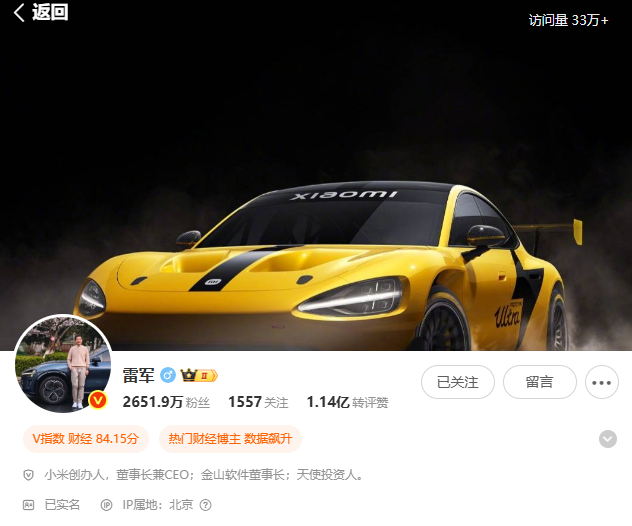
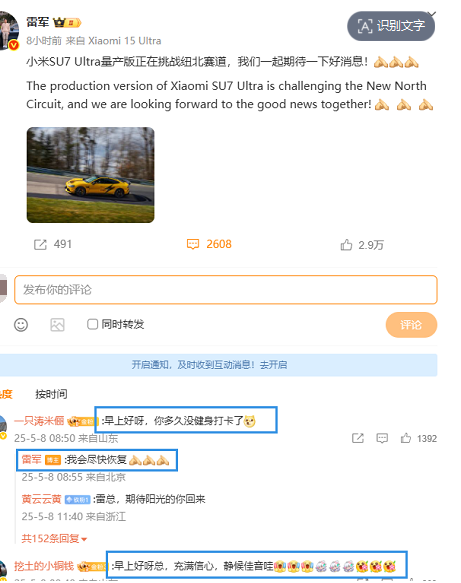
On March 29, 2025, the Xiaomi SU7 accident triggered social concern. However, in the comment area of Lei Jun’s Weibo, tens of thousands of warm messages, such as “don’t care about the outside world’s eyes”, “we will accompany you to survive”, “supervise the fitness clock”, and so on, formed a countercurrent of public opinion. This collective support against public opinion not only shows the cohesion of Xiaomi users, but also reflects the deep logic of brand loyalty.

Three core manifestations of Lei Jun’s fan support
(i)Concentrated outbreak of emotional support
Within 72 hours after the Xiaomi SU7 accident, Lei Jun‘s Weibo added more than 200,000 comments, 83% of which were positive support content. Fans’ comments showed three major features:
empathetic care: “I know you only sleep 4 hours a day”, “the Xiaomi SU7 accident is not your fault” and other expressions, transforming the brand crisis into emotional support for individuals.
Rational tolerance: “technical exploration is inevitably risky” “ support Xiaomi to continue to improve ” and other messages, reflecting the user’s understanding of product iteration.
Action-oriented expression: some fans spontaneously organize “daily fitness punch card supervision” to reduce pressure for Lei Jun in a relaxed way; some users even make “Mi Fan Support Poster” to convey support through visual symbols.
(ii) Collective construction of group identity
In the comment area of Lei Jun Weibo, group labels such as “Mi Fan Family” “ Xiaomi Users ” appear with high frequency. Fans reinforce their identity in the following ways:
Topic aggregation: # Lei Jun cheer #, # Xiaomi hold on # and other topics read more than 500 million times, forming a communication matrix.
Historical Narrative: Senior users use the phrase “From Redmi to SU7, we have witnessed every step of Xiaomi” to express their sense of companionship, binding their personal experience to the brand’s growth.
Crisis Response: In the face of external skepticism, fans spontaneously write “long articles on technical science”, refute public opinion with data, and form a “guardian community” consciousness.
(iii) Active participation in trust repair
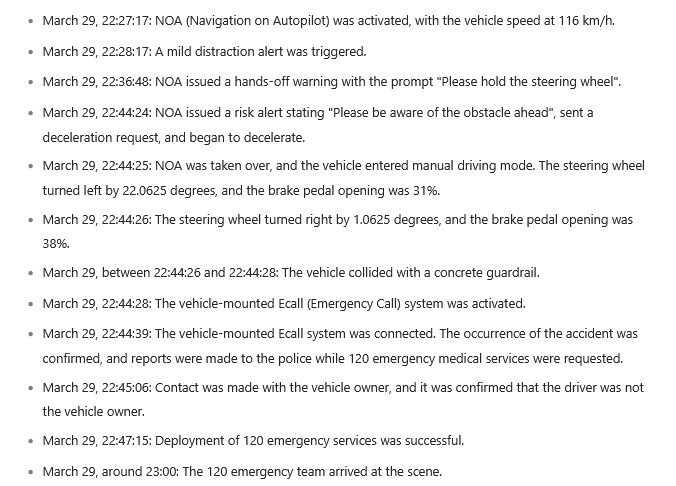
After Xiaomi SU7 accident, Xiaomi officials quickly released a technical review report, and Lei Jun himself responded on the evening of April 1 that he “will take full responsibility”. This frank attitude and efficient action triggered the trust reinforcement mechanism of fans:
Transparent Expectations: The expression “Seeing Xiaomi’s commitment, we are more confident” in the fans’ message directly affirms the brand’s crisis handling.
Shared responsibility: a user message “the Xiaomi SU7 accident is the matter of all Mi fans, we carry it together”, transforming the brand responsibility into a group obligation.
Future commitment: more than 30% of the messages contain the intention to repurchase “the next one will also buy Xiaomi”, which expresses the trust with practical actions.
The Underlying Psychological Mechanism of Lei Jun’s Fan Behavior
(i) Identity construction driven by a sense of belonging
The “social identity theory” in psychology suggests that when individuals categorize themselves into a group, they will actively maintain the group image. Xiaomi fans reinforce the sense of belonging by the following ways:
Symbolic expression: using labels such as “MIUIer” “ Mijia Family Bucket users ” to construct an exclusive identity.
Ritualized Interaction: Participate in offline activities such as “Mi Fan Festival” “ Popcorn Community” to form “ collective memory”.
Value resonance: Bind Xiaomi’s “Technology Inclusion” concept with personal values, such as “Supporting Xiaomi is supporting China’s intellectual manufacturing”.
(ii) Psychological projection of emotional compensation
After the Xiaomi SU7 accident, some fans transformed their concern for the brand into personal care for Lei Jun through messages such as “supervising fitness” and “reminding rest”. This “ downward compatibility ” expression of emotion satisfies a triple psychological need:
Protection desire release: through specific suggestions (e.g., “Suggest adding safety redundancy for autopilot”), users gain a sense of engagement.
Relationship reconfiguration: constructing “two-way guardianship” cognition, e.g. “you guard Xiaomi, we guard you”.
Emotional catharsis: use light topics (e.g. “Lei Jun fitness clocking”) to relieve anxiety and form an emotional buffer zone in crisis.
(iii) The interactive paradigm of social media
Weibo, as an open social platform, provides fans with a stage for public expression. Users amplify their supportive voices in the following ways:
Surrounding support: high-frequency messages form a “brush-screen effect”, signaling to the outside world that “Xiaomi users will not leave”.
Secondary creation: produce UGC content such as emoticons and short videos to transform individual support into group cultural symbols.
Cross-platform linkage: initiating “Xiaomi users have something to say” topics on platforms such as Jittery, Xiaohongshu, etc. to build a communication network.
The deep construction logic of brand loyalty
(i) Accumulation of long-term emotional accounts
Xiaomi has built a high-frequency emotional interaction system through the “user participation in product development” mode (such as the fan co-creation of the MIUI system). Data shows:
Community Activity: the average daily posting volume of Xiaomi community exceeds 500,000, and users submit bug reports, suggest optimization, and even participate in system internal testing.
Activity Participation: The annual “Mi Fan Festival” attracts more than 10 million users to participate, and offline activities cover 500,000 people.
Historical precipitation: 58% of users in the post-accident message have more than 5 years of brand experience, forming “companion loyalty”.
(ii) Deep binding of value resonance
Xiaomi combines brand goals with social values to form emotional resonance beyond commercial interests:
National brand identity: expressions such as “Xiaomi is the hope of Chinese science and technology” in fan messages bind the brand to national sentiment.
Social responsibility: Xiaomi’s investment in public welfare and environmental protection strengthens the image of “corporate citizen”.
Technology Inclusion Concept: During the development of SU7, Xiaomi solicited design suggestions and invited fans to participate in testing through the community, making users “co-builders”.
(iii) Trust Reinforcement for Crisis Response
The “trust repair theory” in management science points out that transparent communication in a crisis can effectively maintain brand loyalty. Xiaomi’s crisis management strategy includes:
Rapid response: release preliminary investigation results within 24 hours after the accident, and initiate third-party testing within 48 hours.
Responsibility: Lei Jun publicly stated that he “will take full responsibility” and promised “not to avoid any problems”.
Continuous communication: through Weibo, community and other channels, daily updates on the progress of the investigation, forming a “closed loop of information”.
Implications for Corporate Branding
(i) Long-term operation of personalized IP
The deep binding of an entrepreneur’s personal image and brand value can form an emotional buffer in a crisis. Lei Jun’s labels such as “model worker” and “technical nerd” have made him a “ approachable entrepreneur”, such as the message from fans “ you care more about the product than we do”.
(ii) Continuous construction of user community
Cultivate the “sense of participation” through scenario-based interaction, so that users are transformed from consumers to brand co-builders. Xiaomi’s “fan advisory group” “ user co-creation program ” and other mechanisms to integrate user opinions into product development.
(iii) Deep integration of social values
Combining brand goals with broader social values to form emotional resonance beyond commercial interests. Xiaomi’s investment in supply chain localization and environmental technology has made it a symbol of “national technology”.
The warm message on Weibo after the Xiaomi SU7 accident is not only a fan’s support for Lei Jun, but also a vivid interpretation of the proposition of “how brands and users can coexist”. When a company truly sees its users as “partners” rather than “consumers”, what it gains is not only support in a crisis, but also long-term trust through the cycle. As a senior Mi fan said in a message, “Xiaomi’s road is still long, we are willing to accompany it step by step.” Behind this simple support is the brand’s 15-year-long value cultivation. In a business world full of uncertainty, this kind of connection based on emotion and value is the real moat of the enterprise against risk.